
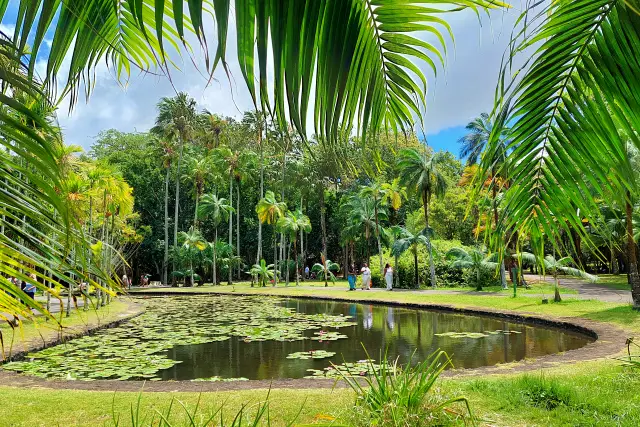
The name "Pamplemousses" comes from the Dutch word pampelmoes, which refers to grapefruit. The Dutch planted an abundance of it in the region, hence the place was named after it. The Dutch were very active in the area due to its abundant forests. Later, when the French took over the island, the land was divided among concessionaires, attributed by Pierre Christophe Lenoir of the French East India Company. The site where the Botanical Garden is located was attributed to Pierre Bermont at the end of the 1720s.

It All Started With Labourdonnais
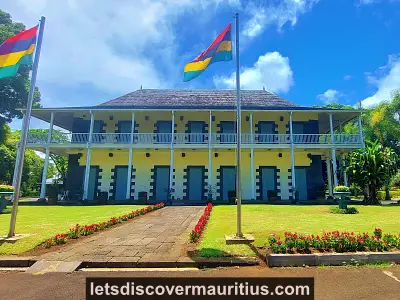
Mahé de Labourdonnais was among the first to develop the site with vegetables and fruits. He established his estate there, Mon Plaisir, in 1736. Mahé de Labourdonnais introduced several vegetables and plants to Mon Plaisir, for example, cassava, commonly known as manioc, which was brought from Brazil to feed the locals and slaves. Moreover, he cultivated vegetables that he transported to Port Louis. At the end of the 1730s, he sold the estate to the French East India Company.
The French East India Company took over the estate and decided to replace most of the vegetable and fruit farms with mulberry trees. The motive was to establish a strong silk industry. However, the project failed, and they later removed all the mulberry trees to plant Bois Noir.
Bois Noir was a great resource for manufacturing gunpowder. During that time, there was a powder mill at Balaclava, built under Mahé de Labourdonnais's command in the 1730s. That powder mill later exploded and was re-established at Pamplemousses itself (read more on it here). Nevertheless, the Bois Noir was mostly used for the powder mill at Balaclava.
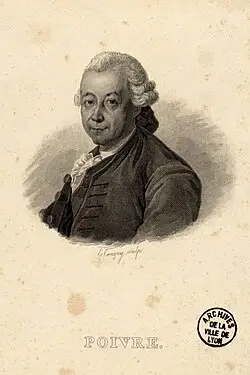
Pierre Poivre, The Mastermind Behind The Botanical Garden
Pierre Poivre arrived in Mauritius in 1746. He developed an interest in Mon Plaisir upon his arrival. In 1767, when he returned as Royal Intendant for both Isle de France and Bourbon, he decided to pursue his dream of acquiring Mon Plaisir. In 1770, he finally bought the estate to establish the botanical garden. Pierre Poivre introduced more than 500 spices to Isle de France. At the garden, he introduced cinnamon, cloves, nutmeg, lychees, mangoes, avocados, camphor, and many others.
Pierre Poivre left Isle de France for good in 1772 with his wife and children. He died at his estate, La Fréta, in 1786. Temporarily, Philibert de Commerson was appointed as director of the botanical garden after Poivre's departure.
Nicholas Céré, The Principal Developer Of the Botanical Garden
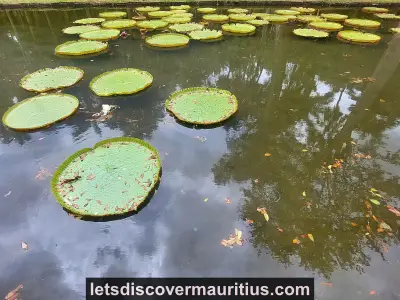
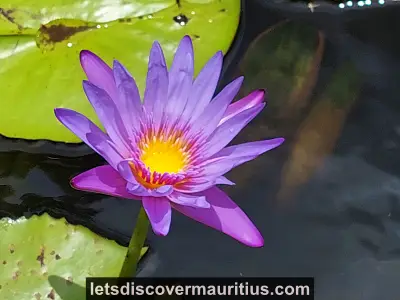
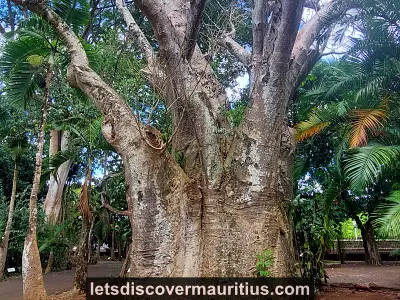
Céré was Poivre's most trusted collaborator. He knew every aspect of the botanical garden and was appointed as its director in 1775. Céré was born in Port Louis itself; hence, he knew the island well and had a deep knowledge of plants, being a botanist himself. In 1772, he planted the famous baobab tree in the yard of the Pamplemousses Government School. Céré harvested the first cloves and nutmeg that Poivre had introduced. He contributed his skills and labor to further develop the botanical garden, particularly concerning spice plants. He redesigned the garden pathways, the ponds, and many other architectural features. The water lily pond is the most famous one in the garden, and it was created by Céré himself.
Céré continued to manage the botanical garden until his death in 1810.
Famous Landmarks & Sights Of The Garden
Apart from spice and endemic plants or trees, the botanical garden consists of several landmarks and sights that draw visitors. During Céré’s administration, he developed the garden in a way that turned it into a place of interest beyond just a botanical haven. After his death, the British administration continued its development until 1968. Since independence, the Mauritian administration has not added much, aside from establishing samadhis for two well-known politicians. Here are some well-known landmarks of the botanical garden:
The Water Lily Pond
The Legendary Tomb of Virginia
The Chateau de Mon Plaisir
The Lotus Flower Pond
Java Deer & Giant Aldabra Tortoise Farm

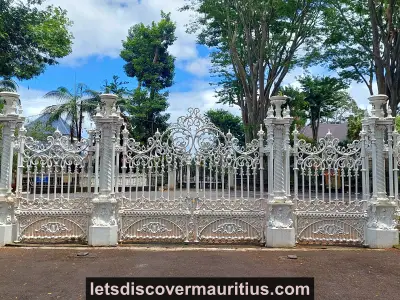
The Main Gate Of the Garden
Palm Tree Alleys, Talipot & Baobab
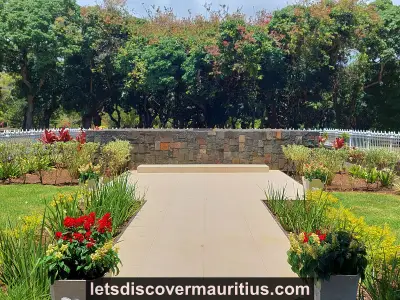
The Political Samadhis
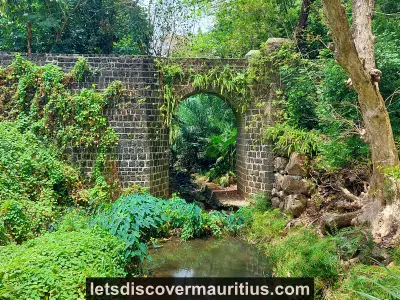
Pont des Soupirs
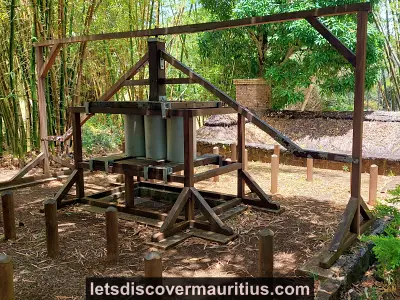
Old Sugar Mill Replica
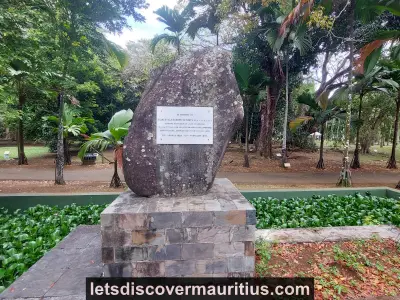
Several Monuments
Controversies
During the COVID-19 pandemic, the botanical garden faced controversies due to its perceived abandonment by the authorities. This issue persisted even after the lockdowns ended. Tourists were disappointed during their visits, as the garden looked vastly different from the pristine images on postcards. Even though the government has allocated millions of rupees in recent budgets to refurbish the garden, there is still much work to be done. The water lily pond, for instance, is in a deplorable state, and in many areas, excessive dried leaves and branches remain uncollected on the ground. Some of the public toilets are also not fully operational.
Another controversy raised by history and heritage enthusiasts concerns the garden's current name. In 1988, the garden was renamed the Sir Seewoosagur Ramgoolam Botanical Garden, after the Father of the Nation. Because he neither founded nor directly contributed to the creation of the botanical garden, many believe the renaming was unjustified. An important note on this is that even during the French administration, the garden was renamed twice, known at times as the Jardin des Plantes and the Jardin du Roy.
Additionally, some purists argue that the garden is not a cemetery and should not house memorial shrines. They believe this practice should be stopped to preserve the authenticity and historical integrity of the site.
Meet Serge Astruc
Serge Astruc is a well-known social media columnist and the founder of the Facebook group "Le Jardin de Pierre Poivre (1719–1786)." He has addressed some of the main concerns regarding the botanical garden as follows:
Conclusion
The Pamplemousses Botanical Garden is a key part of Mauritius's rich history. Important figures like Labourdonnais, Pierre Poivre, and Nicholas Céré helped create this unique home for rare plants and historic monuments. Today, the garden faces real challenges with poor upkeep, damaged ponds, and debates over its official name. To protect this famous place for future generations, proper action must be taken to restore its beauty, care for its plants, and preserve its true historical value.
Author & References

Author: Ali J | Date Published: November 11, 2026 | Last Updated: NA
References: Pamplemousses, Un Quartier chargé d'histoire (Pierre Claite et le comité du vieux cimetière), Allister MacMillan (MAURITIUS: Illustrated – Historical and descriptive commercial and industrial facts, figures and resources)..
Special Thanks: Mr Serge Astruc.